
E-bike battery empty – What to do when your e-bike gives up?
Calling mountain rescue because your e-bike battery is dead – it may sound absurd, but unfortunately, it’s no longer rare in South Tyrol. Such operations tie up valuable resources that are urgently needed for real emergencies. So how can you avoid this situation from the start? And what should you do if it happens anyway? Here are a few helpful tips.
1. Proper tour planning
Good preparation is the foundation of every e-bike tour. Before you start, ask yourself – and honestly answer – the following questions:
- How long and steep is the tour? Consider total distance and elevation gain.
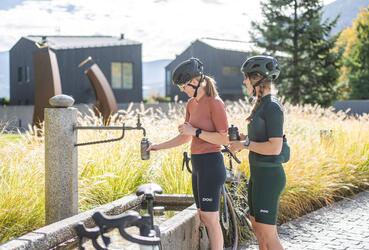
- Are there charging stations or huts along the way? Find out in advance where you can recharge. But be careful: not every hut always has enough power, especially around lunchtime.
- Which bike has the weakest battery in the group? Plan your tour based on the smallest capacity to ensure everyone gets back safely.
- What’s the weather like? Cold can significantly reduce battery performance. Also avoid midday heat, which is exhausting for both you and your battery.
- Are there ways to turn back? Plan alternative routes in case you need to shorten the tour.
If you're unsure about the planning, ask your bike hotel. Locals know the trails best and can give valuable advice or guide you on a tour.
2. Before you start
Make sure your bike and gear are ready for the ride:
- Battery and navigation: Fully charge your battery. Take your charger with you and check that your navigation device works and the route is saved.
- Equipment: Bring a multitool, pump, repair kit, spare tube, quick link for the chain, and some cable ties.
3. Save battery power while riding
There’s a lot you can do during the ride to extend your e-bike’s range:
- Start gently: Begin your tour in a low support mode or in automatic mode.
- Use your gears: Actively use the mechanical gears to reduce motor load.
- High cadence: Pedal faster and lighter for more efficiency – it helps both you and your battery.
- Reduce speed: You don’t have to go at 25 km/h. A relaxed 10–12 km/h is often enough and saves energy.
- Avoid power peaks: Steep climbs need more power. Try to tackle them using muscle power if possible.
- Watch your battery level: Monitor your charge and recharge when you can.
- Turn back early: Better to head back too soon than too late. The mountain will still be there tomorrow.
- Lights off: Turn off your lights during the day to save power.
4. If the motor stops anyway
Sometimes it happens, despite all precautions. Before calling mountain rescue, try these steps:
- Restart: Turn the motor off and on again. Sometimes a simple reset helps.
- Check cables and sensors: Make sure all cables are properly connected. Also check the rear wheel sensor – it might have shifted.
- Keep going by pedaling or pushing: If the motor no longer works, turn back. Take advantage of downhill sections, pedal where possible, and push the bike if necessary. Good planning should bring you soon to a hut or charging point.
- Mountain rescue is there for medical emergencies! They will always respond if you're in a medical emergency.





![hotel-zentral-fruehjahr-2017-1[2]](/media/f27c6047-8cf0-4811-a702-f85ac90ef4ad/369_x_250/20260108104403/hotel-zentral-fruehjahr-2017-1-2.jpg)