
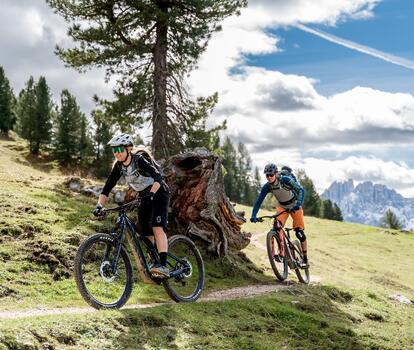
Basic riding techniques for the start of the season in South Tyrol
Whether you’re a casual rider or a pro: after the long winter break, it’s worth refreshing and practicing the most important riding technique basics. Together with South Tyrolean bike schools, we highlight four core skills to help you get off to a great start in the new season.
Braking
Precise braking, controlled deceleration, and maintaining speed are essential for a safe experience on two wheels. That’s why it’s important to have your brakes fully under control. On modern bikes with disc brakes, one finger on the brake lever is enough. Typically, the front brake is on the left, the rear brake on the right.
Get familiar with both: first push your bike and alternately apply the brakes – then do the same while riding, seated or standing. Take it slowly and pay attention to how the bike and your body react. You’ll quickly notice that the front brake is much more powerful. Learn to use it well – it’s the key to maximum control.
Want to learn more about proper braking on long descents? Check out the interview with bike guide and skills coach Klaus Nischler!
Balance
As long as the bike is moving, it keeps its balance on its own. Once it stops, body awareness comes into play: either balance briefly and then keep pedaling – or deliberately put a foot on the ground. In mountain biking, it’s common to stop briefly to assess the situation. A good sense of balance helps prevent falls בדיוק in these moments.
Cornering
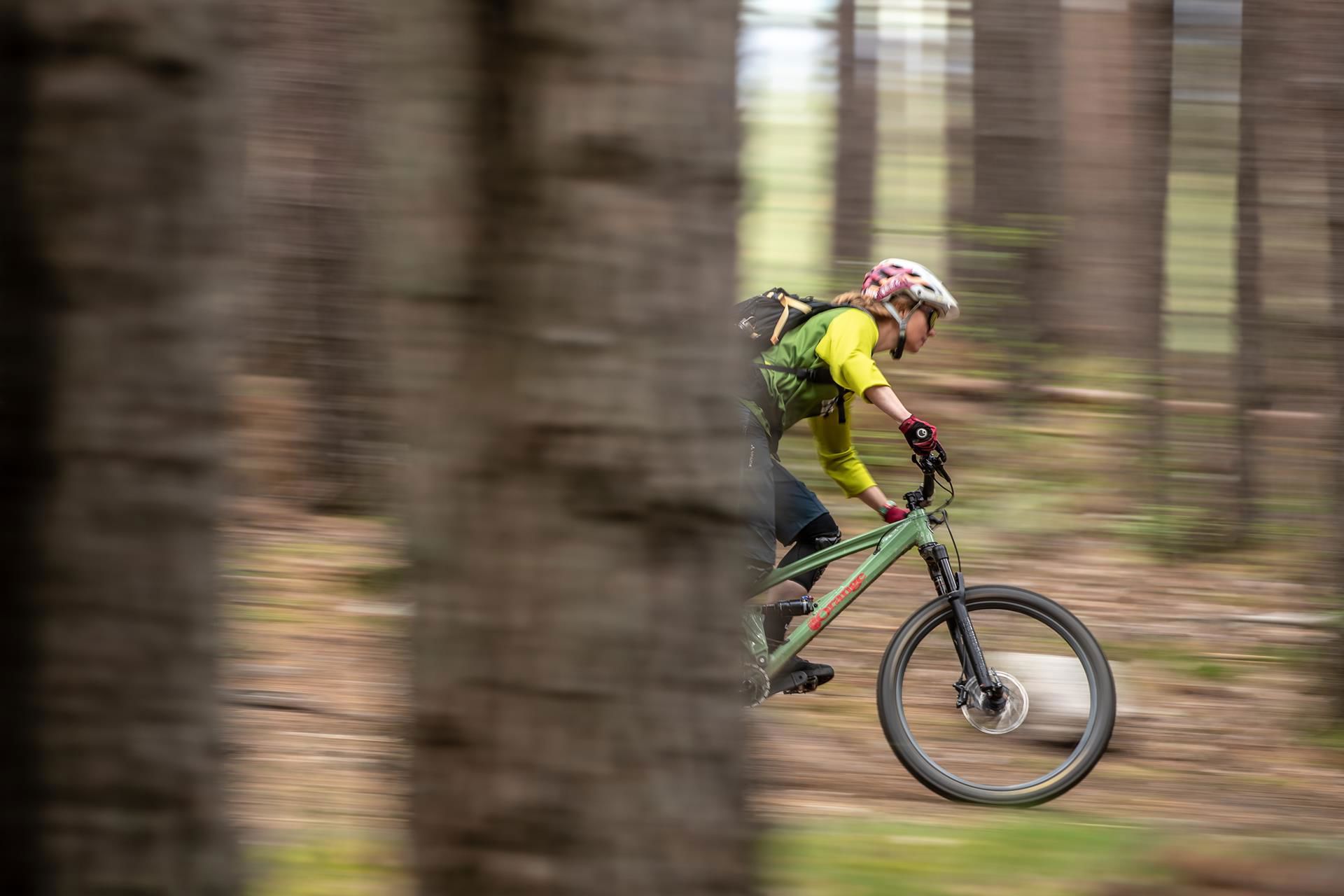
Fast, sweeping turns on bike paths and forest roads require different skills than tight, slow turns on trails or at intersections. Depending on the situation, different techniques are needed. The most important aspect of cornering, however, is where you look. Your body and bike will follow your gaze.
We conducted a detailed interview with riding skills coach Arno Feichter. There you can learn everything about the basics of MTB cornering technique.
Obstacles
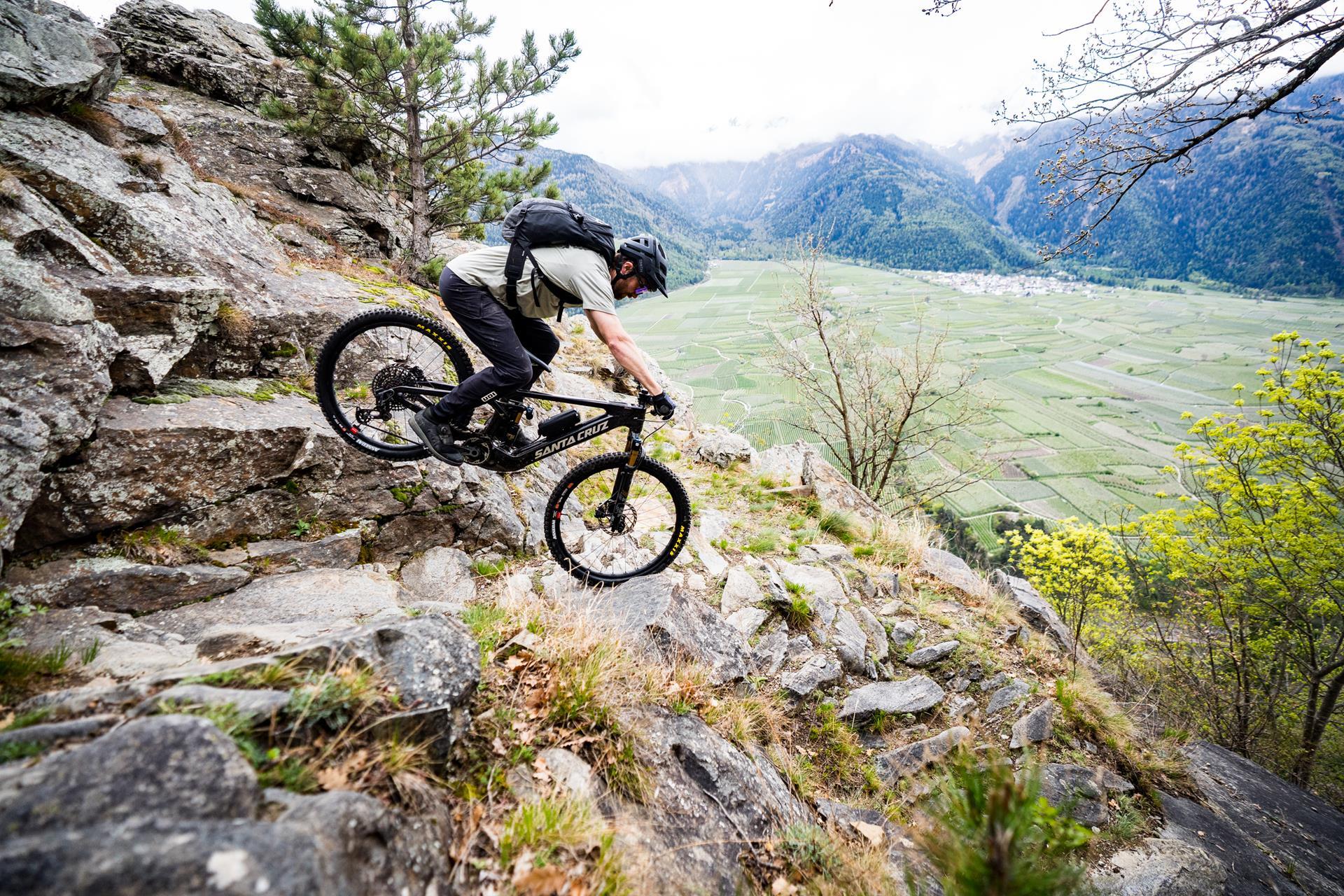
Don’t worry – you don’t need to jump or do wheelies to overcome simple obstacles and avoid flats. The key lies in deliberately unweighting the front or rear wheel and using the right momentum.
Sounds complicated? It is, a little. But for small roots or a curb of around 10 cm, it’s often enough to keep your arms relaxed and let the suspension fork do the work – the rear wheel will usually follow on its own. To avoid getting a flat, it’s important to shift your weight forward as soon as the front wheel clears the obstacle.
If you want to dive deeper: a local skills course is the best investment for a safe and relaxed start to the season.


![hotel-zentral-fruehjahr-2017-1[2]](/media/f27c6047-8cf0-4811-a702-f85ac90ef4ad/369_x_250/20260108104403/hotel-zentral-fruehjahr-2017-1-2.jpg)